
Arid-region resilience
Grown in Rajasthan's low-rainfall zones, the beans develop dense cotyledons and concentrated nutrients naturally.
VegTradeHub supplies export-grade moth dal (matki) in whole and split forms from the arid Marwar region. Drought-resistant, protein-rich, and ideal for sprouting, snack manufacturing, and dal milling — shipped worldwide with full phytosanitary certification.
| Parameter | Specification |
|---|---|
| Common name | Moth Dal, Matki, Moth Bean, Turkish Gram, Dew Bean |
| Botanical name | Vigna aconitifolia |
| Category | Pulse commodity |
| Origin | India (Rajasthan, Jodhpur region) |
| Available forms | Whole (matki), Split (moth dal), Flour (moth besan) |
| Growing region | Jodhpur, Pali, Nagaur, Barmer districts, Rajasthan |
| Harvest season | October – December (kharif); March – April (zaid in irrigated areas) |
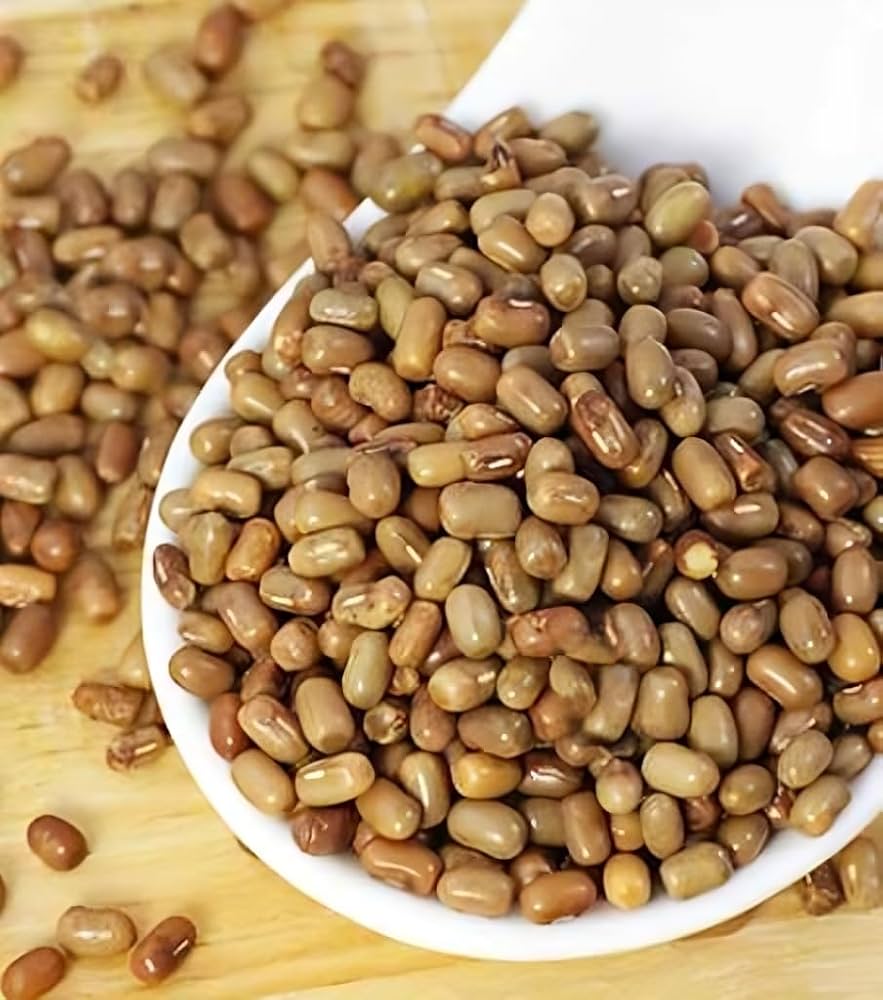
Moth bean (Vigna aconitifolia), locally known as matki or moth, is a hardy, drought-tolerant legume native to the arid and semi-arid zones of northwestern India. The Marwar region — encompassing Jodhpur, Pali, and Nagaur — produces moth beans with distinctive nutty flavour, high protein content (22–24%), and excellent sprouting viability, making them prized for both traditional cuisine and modern food processing.
VegTradeHub sources moth dal directly from farmer collectives in western Rajasthan, where the crop thrives on minimal rainfall (300–400 mm annually) and sandy-loam soils. The beans are harvested at physiological maturity, sun-dried on clean threshing floors, and transported to our Jodhpur packhouse for mechanical cleaning, grading, and packing under hygienic conditions. We supply whole matki for sprouting and snack applications, split moth dal for quick-cooking dal preparations, and moth besan for besan-based snacks and gluten-free formulations.
Grown in Rajasthan's low-rainfall zones, the beans develop dense cotyledons and concentrated nutrients naturally.
Whole matki consistently achieves 90%+ germination — preferred by sprout houses and health-food brands.
Sourced from vetted growers in Jodhpur, Pali, and Nagaur following good agricultural practices.
Pods picked at full maturity when protein and starch levels peak, ensuring consistent cooking quality.
Cleaned, de-stoned, and size-graded on optical sorters; split dal passes through precision roller mills.
Meets international phytosanitary standards — clean, sound, pest-free, with moisture ≤12%.
Pre-cooled after cleaning; maintained through refrigerated transport to port or airport.
Minimized field-to-pack intervals preserve amino acid profile and functional properties.
Light brown to tan seed coat, uniform size — preferred by processors for visual consistency.
The Marwar region's hot days, cool nights, and low humidity during the growing season (July–October) create ideal conditions for moth bean. The crop's deep taproot accesses subsoil moisture, while high solar radiation drives photosynthetic efficiency. This natural stress adaptation concentrates protein and reduces anti-nutritional factors, yielding beans with superior nutritional density and cooking characteristics compared to irrigated-region production.
Sandy loam to loamy sand soils (Typic Torripsamments) with low organic matter (0.3–0.5%), pH 7.5–8.2, and excellent drainage dominate the Jodhpur–Pali–Nagaur belt. These soils warm quickly after monsoon onset, promoting rapid germination and early vigour. The low clay content minimises soil adhesion on harvested pods, reducing post-harvest cleaning requirements and mechanical damage during threshing.
Generations of Marwar farmers have refined moth bean cultivation — from seed selection (local landraces like Jwala, RMO-40, and CZM-2) to intercropping with pearl millet (bajra) and cluster bean (guar). Traditional knowledge guides optimal sowing windows (first fortnight of July), seed rates (12–15 kg/ha), and harvest timing (when 80% pods turn brown). VegTradeHub partners with farmer producer organisations (FPOs) that blend this heritage with modern GAP protocols.
Jodhpur's strategic location offers multi-modal export access: Jodhpur Airport (JDH) handles perishable air freight to GCC and Southeast Asia; Jodhpur Junction connects to the Dedicated Freight Corridor for rail reefer movement; NH-62 and NH-25 link to Mundra (350 km) and Pipavav (420 km) ports for sea freight. Our packhouse at Boranada Industrial Area, 15 km from Jodhpur city, operates 24/7 during peak season with direct reefer plug points.
| Parameter | Grade A (Premium) | Grade B (Standard) | Grade C (Processing) |
|---|---|---|---|
| Form | Whole matki / Split dal | Whole matki / Split dal | Split dal / Flour |
| Seed size (whole) | 3.5–4.5 mm, uniform | 3.0–5.0 mm, slight variation | 2.5–5.5 mm, mixed |
| Split uniformity | 95% clean splits, minimal brokens | 85% clean splits, <5% brokens | 70% splits, higher brokens |
| Colour (seed coat) | Light brown to tan, uniform | Light to medium brown | Variable, some discoloration |
| Cotyledon colour | Bright yellow, uniform | Yellow, minor variation | Pale to dull yellow |
| Foreign matter | ≤0.1% (zero stones, metal) | ≤0.25% | ≤0.5% |
| Damaged / discoloured | ≤0.5% | ≤1.5% | ≤3.0% |
| Weevilled / bored | Zero tolerance | ≤0.5% | ≤1.0% |
| Moisture content | ≤11% | ≤12% | ≤13% |
| Protein (dry basis) | ≥23% | ≥21% | ≥19% |
| Sprouting germination | ≥95% | ≥85% | N/A (split) |
| Packaging | 25 kg / 50 kg PP woven bags; 10 kg / 25 kg kraft paper bags; custom | ||
| Country of origin | India | ||
| Port of loading | Jodhpur (air), Mundra / Pipavav (sea) | ||
VegTradeHub offers full private-label packaging services for importers, distributors, and retail chains:
| Parameter | Specification |
|---|---|
| Temperature | 10–15 °C (cool, dry); ≤10 °C for extended storage >6 months |
| Relative humidity | 55–65% (prevents moisture uptake and mould growth) |
| Air circulation | Continuous, uniform; avoid direct airflow on bag surfaces |
| Pest management | IPM programme: pheromone traps, phosphine fumigation per ISPM-15 if required |
| Stacking | Max 10 bags high on pallets; use pallet spacers for airflow |
| Segregation | Store away from strong odours, chemicals, and high-moisture commodities |
12–18 months at 10–15 °C / 55–65% RH. Maintains germination viability >90%, cooking quality, and nutritional profile. Suitable for sprouting and premium retail.
10–12 months under cool, dry storage. Minor colour darkening over time; cooking and nutritional quality remain excellent for dal and processing use.
6–9 months — intended for near-term milling, flour production, or snack manufacturing. Higher brokens and moisture accelerate quality decline.
Whole matki (Grade A) is the preferred choice for commercial sprout houses, organic brands, and health-food manufacturers. High germination rate, crisp texture, and mild nutty flavour make it ideal for ready-to-eat sprouts, sprout powders, and functional food formulations.
Split moth dal and whole matki are key ingredients in traditional Indian snacks (matki usal, misal, bhujia) and modern extruded snacks. Uniform sizing reduces waste on automated frying and baking lines. Moth besan (flour) provides binding and protein fortification in gluten-free snack formulations.
Split moth dal cooks in 15–20 minutes without pre-soaking — a major advantage for quick-cook dal packs, ready-to-eat meals, and institutional catering. Consistent hydration and low foaming simplify large-scale kettle cooking.
Moth bean protein concentrate and isolate are emerging ingredients for plant-based meat analogues, protein bars, and sports nutrition. The bean's balanced amino acid profile (high lysine, adequate methionine) complements cereal proteins. VegTradeHub supplies identity-preserved lots for protein extraction facilities.
Hotels, restaurants, cloud kitchens, and catering chains source split moth dal for daily menu items (dal tadka, matki chi usal, sprouted salads). 10 kg and 25 kg food-service packs with tamper-evident seals ensure portion control and hygiene compliance.
Dubai, Singapore, Rotterdam, and Colombo serve as re-export hubs for moth dal to wider MENA, SE Asia, and EU markets. VegTradeHub supports mixed-container loads combining moth dal with other Rajasthan pulses (moong, chana, urad) and spices for consolidated buyer programmes.
UAE, Saudi Arabia, Qatar, Oman, Kuwait, Bahrain, Jordan, Lebanon. Strong demand for sprouting-grade matki and split dal for traditional cuisine.
Singapore, Malaysia, Indonesia, Thailand, Philippines, Vietnam. Growing health-food and plant-protein sectors drive demand for whole and processed moth bean.
Netherlands, Germany, UK, France, Belgium. Ethnic retail, sprouting companies, and plant-protein manufacturers. EU MRL and phytosanitary compliance mandatory.
Bangladesh, Nepal, Sri Lanka, Maldives. Land and sea connectivity; wholesale and processing grades preferred. Competitive pricing essential.
USA, Canada. Air freight for specialty sprouting grades; sea freight for processing volumes. USDA-APHIS import permit and phytosanitary compliance required.
Mauritius, Seychelles, South Africa, Kenya, Tanzania. Growing demand via Dubai transshipment or direct from Mundra. Price-sensitive markets favour Grade B/C.
Direct work with FPOs and grower groups in Jodhpur, Pali, Nagaur — full traceability to field level.
Track record shipping pulses to 25+ countries with destination-specific documentation expertise.
Standardised grading, documented QC, and lot-level traceability season after season.
From trial LCL shipments (2 MT) to full-season programmes (500+ MT) — no rigid minimums.
Harvest-to-load discipline: pre-booked reefer space, priority air cargo slots, buffer stock at packhouse.
Complete, accurate export documents delivered on time — customs clearance without delays.
Transparent cost breakdowns (FOB, CIF, C&F) — no hidden margins or surprise surcharges.
Single point of contact per buyer; responsive across IST, GST, CET, and EST time zones.
Private label, retail-ready, MAP, eco-friendly — adapted to your market requirements.
Multi-season supply partnerships with forecast sharing, volume commitments, and price stability mechanisms.
Trial orders from approximately 2 MT (LCL air or sea). Full-container programmes start at 18–22 MT with better pricing, priority grading, and dedicated acreage allocation.
Yes — Grade A whole matki is selected and tested for ≥95% germination. We provide germination certificates per lot and can supply in MAP packaging to preserve viability during transit.
Yes. Split dal is milled on precision roller mills with <5% brokens (Grade A). Moth besan is stone-ground or hammer-milled to 80–100 mesh, sieved, and packed in moisture-barrier bags for gluten-free and snack applications.
Yes — full private-label service: custom artwork, multi-language labels, consumer packs (500 g–2 kg), retail-ready formats, MAP, vacuum, and eco-friendly options. MOQ for custom print runs: 5,000 bags.
Yes — to 25+ countries across the Middle East, Southeast Asia, Europe, South Asia, North America, and Africa. We handle destination-specific phytosanitary, labelling, and certification requirements.
Pre-cleaning to ≤12% moisture, food-grade packaging with moisture barriers, reefer containers at 10–15 °C with ventilation, temperature/humidity data loggers, and arrival quality verification protocols.
Air freight (12–36 hrs), sea reefer (10–28 days), LCL reefer consolidations (weekly from Mundra), and land border transport to SAARC countries.
Yes — mixed 40'HC reefers combining moth dal with moong dal, chana, urad, cumin seeds, methi dana, red chilli powder, and other Rajasthan commodities. Consolidated documentation and single-point coordination.
Select farms: IndiaGAP / GlobalGAP certified. Packhouse: FSSAI Central License, APEDA RCMC, HACCP-based FSMS, residue testing per FSSAI/Codex/EU MRLs. Organic (NPOP/USDA-NOP) available for certified lots.
Early booking (May–July) secures best pricing, Grade A allocation, and dedicated acreage. Forward contracts lock in supply and pricing before harvest (October–December). Zaid season (March–April) offers supplementary volumes.
Claims must be reported within 48 hours of arrival with photographic evidence, data logger records, and representative samples. We investigate within 24 hours and resolve (replacement, credit, or adjustment) within 7 business days per our quality assurance protocol.