
Origin-verified sourcing
Direct relationships with Tea Board-registered estates and bought-leaf factories across Assam, Darjeeling, Nilgiris, and Dooars.
VegTradeHub supplies export-grade chai pati (tea leaves) in CTC and orthodox grades sourced from India's premier tea-growing regions — Assam, Darjeeling, Nilgiris, and Dooars. We serve tea blenders, packet tea brands, beverage manufacturers, and wholesale distributors across 25+ countries with consistent quality, reliable cold-chain logistics, and complete export documentation.
| Parameter | Specification |
|---|---|
| Common name | Chai Pati, Tea Leaves, Camellia sinensis |
| Botanical name | Camellia sinensis var. sinensis / var. assamica |
| Category | Tea commodity |
| Origin | India (Assam, Darjeeling, Nilgiris, Dooars, Kangra) |
| Available forms | CTC (Crush, Tear, Curl), Orthodox whole leaf, Broken leaf, Fannings, Dust |
| Growing region | Assam valleys, Darjeeling hills, Nilgiri mountains, Dooars plains, Kangra valley |
| Harvest season | First flush (Mar-Apr), Second flush (May-Jun), Monsoon flush (Jul-Sep), Autumn flush (Oct-Nov) |
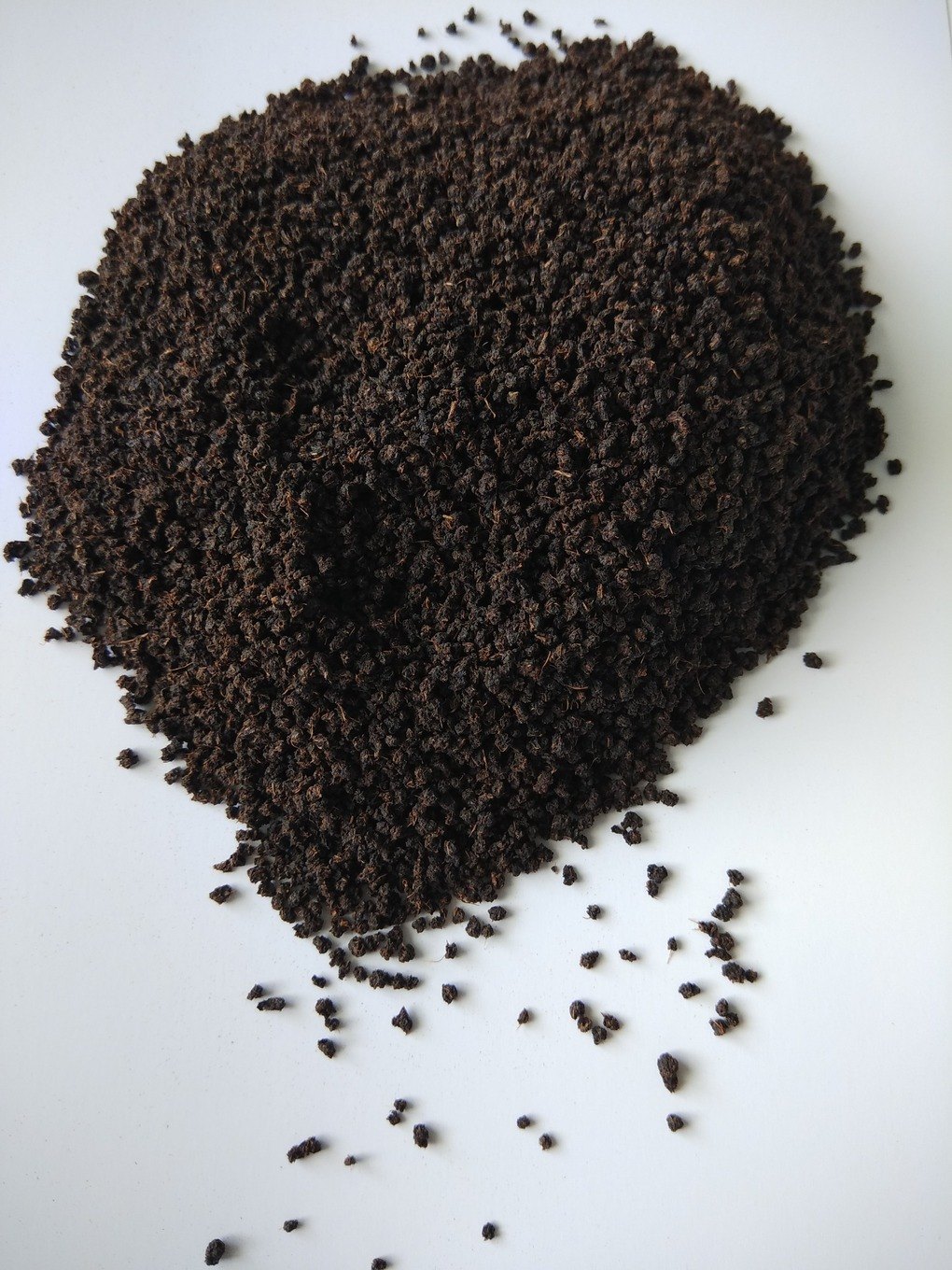
India is the world's second-largest tea producer, and chai pati — the processed leaf that fuels the global tea trade — comes from diverse terroirs across the subcontinent. VegTradeHub sources directly from certified estates and bought-leaf factories in Assam's Brahmaputra valley, Darjeeling's Himalayan foothills, the Nilgiri blue mountains, and the Dooars plains. Each region imparts distinct character: Assam delivers bold, malty CTC liquors ideal for strong breakfast blends; Darjeeling offers delicate, muscatel-flavored orthodox leaf prized by connoisseurs; Nilgiri provides fragrant, brisk year-round production suited for iced tea and blends.
Our supply chain spans estate-fresh primary production through auction and private-sale channels, with quality control at every stage — withering, rolling, oxidation, firing, sorting, and grading. Whether you need BP1/PD/CTC dust for high-volume tea bags, OP/OPA whole leaf for premium loose-leaf packs, or custom blends combining multiple origins, we deliver consistent cup quality, batch traceability, and phytosanitary compliance for seamless import clearance.
Direct relationships with Tea Board-registered estates and bought-leaf factories across Assam, Darjeeling, Nilgiris, and Dooars.
CTC and orthodox grades sorted to strict ISO 3720 / Tea Board specifications — no grade mixing, consistent particle size.
First flush, second flush, monsoon, and autumn flush teas sourced in season — cup profile matched to your blend requirements.
Moisture, water extract, total ash, and polyphenol parameters controlled within tight tolerances for repeatable blend performance.
FSSAI, Tea Board, and destination-country MRL compliance; pesticide residue testing per EU/Japan/US standards on request.
Vacuum-sealed, nitrogen-flushed, or foil-lined packaging options; reefer container management for flavor preservation.
Collaborative blend formulation, pilot batches, sensory panel feedback, and custom packaging for brand owners.
FOB/CIF/CFR quotes with full cost breakdown; complete export documentation including Certificate of Origin, Phytosanitary, and COA.
The Brahmaputra valley's low-elevation, high-rainfall terroir produces Camellia sinensis var. assamica leaf with high polyphenol content. This yields the strong, bright, malty CTC liquors that form the backbone of English breakfast, Irish breakfast, and chai blends worldwide. We source from organized estates and quality bought-leaf factories in Upper Assam (Tinsukia, Dibrugarh, Sivasagar) and Lower Assam (Goalpara, Bongaigaon), ensuring consistent BP1, PF1, PD, and Dust grades year-round.
High-elevation (600-2,000m) gardens in the Himalayan foothills produce Camellia sinensis var. sinensis leaf with unique terroir-driven flavor — floral, muscatel, stone-fruit notes. First flush (spring) delivers light, aromatic liquor; second flush (summer) offers fuller body and pronounced muscatel. We work with Tea Board-certified Darjeeling gardens for orthodox whole-leaf grades (SFTGFOP1, FTGFOP, TGFOP) and broken grades for premium blends.
The Blue Mountains of Tamil Nadu/Kerala border produce tea at 1,000-2,500m elevation with a distinct floral-fruity character and brisk astringency. Nilgiri tea excels in iced tea applications, flavored blends, and as a high-quality filler in packet tea. Unlike seasonal Darjeeling, Nilgiri offers consistent year-round production. We source orthodox and CTC grades from the Nilgiri-Wynaad region, including certified organic estates.
The Dooars plains at the Himalayan foothills (Jalpaiguri, Alipurduar, Cooch Behar) and neighboring Terai produce reliable CTC grades with good color, strength, and briskness — ideal for standard tea bag blends and masala chai bases. These regions offer cost-effective volume supply with consistent cup quality, supported by modern bought-leaf factories with ISO/HACCP certification.
| Parameter | CTC Grades (Assam/Dooars) | Orthodox Grades (Darjeeling/Nilgiri) | Quality Standard |
|---|---|---|---|
| Primary grades | BP1, BOP, BPS, PF1, PD, Dust | SFTGFOP1, FTGFOP, TGFOP, GFOP, FOP, BOP, FBOP, GOF | ISO 3720 / Tea Board of India |
| Moisture content | 2.5 - 3.5% | 2.5 - 3.5% | ISO 1573 |
| Water extract (solubles) | 32 - 45% | 30 - 42% | ISO 9768 |
| Total ash | 4.0 - 6.5% | 4.0 - 6.0% | ISO 1575 |
| Water-soluble ash | > 45% of total ash | > 50% of total ash | ISO 1576 |
| Acid-insoluble ash | < 1.0% | < 0.8% | ISO 1577 |
| Crude fiber | < 16.5% | < 15.0% | ISO 15598 |
| Polyphenols (TPC) | 20 - 30% | 18 - 28% | Folin-Ciocalteu |
| Caffeine | 2.5 - 4.0% | 2.0 - 3.5% | ISO 10727 |
| Pesticide residues | Per FSSAI / EU MRL / Japan MRL / US EPA tolerances | Per FSSAI / EU MRL / Japan MRL / US EPA tolerances | GC-MS/LC-MS multi-residue screen |
| Heavy metals (Pb, Cd, As, Hg) | Within FSSAI / Codex limits | Within FSSAI / Codex limits | ICP-MS |
| Microbiological (TPC, yeast, mold, coliforms, Salmonella, E. coli) | Per FSSAI / ICMSF guidelines | Per FSSAI / ICMSF guidelines | ISO 4833 / ISO 21527 / ISO 16649 |
| Foreign matter | Absent | Absent | ISO 15599 |
| Packaging | 20/25/30 kg multi-wall paper sacks with PE liner; 50 kg jute bags; 250-500 kg foil-lined bulk bags; custom retail packs | ||
| Country of origin | India | ||
| Port of loading | Kolkata (sea), Guwahati/Bagdogra (air), Cochin (sea - Nilgiri) | ||
VegTradeHub offers full private-label packaging services for tea brands, blenders, and retail chains:
| Parameter | Specification |
|---|---|
| Temperature | Cool, dry conditions: 10-20°C (50-68°F); avoid temperature fluctuations |
| Relative humidity | < 60% RH; tea is hygroscopic and absorbs moisture/odors readily |
| Light exposure | Store in opaque packaging / dark warehouse; UV degrades chlorophyll and polyphenols |
| Odor isolation | Separate from spices, chemicals, fuels, and strong-smelling commodities |
| Pest management | IPM program; tea is susceptible to cigarette beetle, tea moth, and psocids |
| Shelf life (proper storage) | CTC: 18-24 months; Orthodox whole leaf: 24-36 months; Flavored teas: 12-18 months |
18-24 months in multi-wall paper sacks with PE liner at < 20°C, < 60% RH. Retains liquor color, strength, and briskness for tea bag and blending applications.
24-36 months in foil-lined or vacuum-sealed packaging. Flavor profile matures favorably in first 6-12 months; minimal degradation with moisture/oxygen barrier.
12-18 months — added flavors (bergamot, jasmine, spices) are volatile. Nitrogen-flushed foil packaging essential for maximum retention.
CTC grades (BP1, PF1, PD) form the base for breakfast blends, builder's tea, and mass-market packet tea. Orthodox grades add complexity, aroma, and premium positioning. Consistent grade specifications enable automated blending lines.
Strong, malty Assam CTC (BP1/PD) stands up to milk, ginger, cardamom, cinnamon, and clove. High polyphenol content ensures color and body retention after boiling. Preferred base for Indian domestic and export chai blends.
Nilgiri and Dooars CTC/orthodox grades provide brisk, clear liquor that doesn't cloud on cooling — essential for bottled iced tea. Low-cream-down varieties selected for RTD processors.
Darjeeling first/second flush, Nilgiri frost tea, Assam golden tips, and single-estate orthodox grades for specialty tea shops, online retailers, and subscription boxes. Story-driven origin marketing supported by estate traceability.
Bulk CTC and orthodox grades for hotels, restaurants, cafes, airlines, and catering. Custom pack sizes (500g, 1kg, 2kg) with brand-neutral or private labeling. Consistent brew parameters for commercial equipment.
Neutral CTC and orthodox filler teas for jasmine, earl grey, fruit, and herbal blends. Base tea must not overpower added flavors — we supply low-polyphenol, high-absorption grades optimized for scenting lines.
UAE, Saudi Arabia, Qatar, Oman, Kuwait, Bahrain, Jordan, Lebanon, Iran, Iraq. High per-capita tea consumption; strong demand for CTC dust/PD for karak chai and orthodox for premium blends.
Bangladesh, Nepal, Sri Lanka, Maldives, Pakistan, Afghanistan. Land/sea connectivity; bulk CTC for blending, orthodox for premium segments. SAFTA preferential access.
Russia, Kazakhstan, Uzbekistan, Ukraine. Traditional tea-drinking markets; strong demand for CTC and orthodox grades via Baltic/Black Sea ports or rail.
UK, Germany, Netherlands, Poland, Ireland, France. Blending houses, packet tea brands, specialty retailers. EU MRL compliance, organic certification, and sustainability documentation critical.
USA, Canada. Growing specialty tea segment (Darjeeling, Nilgiri, Assam orthodox); RTD and iced tea manufacturers. FDA prior notice, FSMA compliance, USDA organic where applicable.
Egypt, Morocco, Tunisia, South Africa, Kenya, Mauritius, Seychelles. CTC for local blending/packing; re-export hubs. Competitive freight from Indian ports.
Long-term relationships with Tea Board-registered gardens and bought-leaf factories across all major Indian tea regions.
In-house tea taster panel supports custom blend formulation, pilot batches, and sensory profiling for brand owners.
Strict adherence to ISO 3720 / Tea Board grade standards — no grade substitution, consistent particle size distribution.
From 5 MT trial orders to 500+ MT annual contracts. Packaging from 500g retail packs to 500 kg bulk bags, all customizable.
Pre-booked container space, priority air cargo slots, and flush-season forward contracts to secure best grades.
Phytosanitary, COA, Certificate of Origin, fumigation, organic/fair trade certs — delivered ahead of vessel departure.
25+ countries served; knowledge of import regulations, MRL requirements, labeling laws, and port procedures.
FOB/CIF/CFR breakdowns with no hidden margins; price risk management via forward contracts and auction tracking.
Single point of contact per buyer; multilingual support (English, Hindi, Arabic, Russian); responsive across time zones.
Trial orders from 5 MT (one 20' container partial load). Full container programs start at 18-20 MT with better pricing, dedicated grade allocation, and priority shipping.
Yes — we offer flush-specific programs. First flush Darjeeling (Mar-Apr) and second flush (May-Jun) require forward booking (Jan-Feb) for best garden selection. Nilgiri frost tea (Jan-Feb) and Assam peak CTC (May-Jul) also seasonal.
Yes. We support blend formulation with pilot batches (10-50 kg), sensory evaluation reports, specification lock-in, and full private-label packaging — sachets, loose-leaf tins, pouches, pyramid bags via partner facilities.
Our supply base includes estates/factories with: Tea Board registration, FSSAI, ISO 22000/HACCP, Rainforest Alliance, Fairtrade, UTZ, Organic (NPOP/USDA-NOP/EU), Trustea (Indian sustainability code). Specific certs per lot on request.
Pre-harvest interval monitoring, multi-residue GC-MS/LC-MS screening (400+ compounds) at NABL-accredited labs, compliance with EU Reg 396/2005, Japan Positive List, US EPA tolerances, and FSSAI MRLs. COA provided per shipment.
For premium orthodox: vacuum-sealed foil-lined bags (1-5 kg) inside master cartons, nitrogen-flushed. For CTC bulk: multi-wall paper sacks with PE liner + container desiccants + vapor barrier liner. Reefer containers (10-15°C) recommended for high-value grades.
Yes — we regularly ship mixed 20'/40' containers combining Assam CTC, Darjeeling orthodox, Nilgiri, and Dooars grades. Palletized by grade/lot with individual documentation. Optimizes freight cost for blenders needing multiple origins.
Spot stock (warehouse): 7-10 days for documentation and loading. Fresh factory outturn: 15-25 days depending on grade, flush, and factory schedule. Forward contracts: shipment per agreed calendar.
Claims must be reported within 7 days of arrival with: photos of packaging/lot codes, cup evaluation notes, lab reports (if quality parameter dispute), and temperature/humidity logger data. We investigate within 5 business days and resolve (replacement, credit, or joint survey) within 15 business days.