
High germination purity
Whole green gram selected for >95% germination rate — essential for commercial sprouting operations.
VegTradeHub supplies premium Mung Dal in whole and split forms from Rajasthan's pulse belt. Export-grade quality for sprouting, dal milling, noodle production, and protein extraction. Flexible packaging, cold-chain logistics, and global shipping to 25+ countries.
| Parameter | Specification |
|---|---|
| Common name | Moong dal, green gram, mung bean, golden gram, munggo |
| Botanical name | Vigna radiata (L.) Wilczek |
| Category | Pulse / Legume |
| Origin | India (Rajasthan, Jodhpur region) |
| Available forms | Whole green gram, split moong dal (yellow, dehulled), moong dal flour |
| Growing region | Jodhpur, Pali, Nagaur districts, Rajasthan |
| Harvest season | March-April (spring/summer), October-November (kharif) |
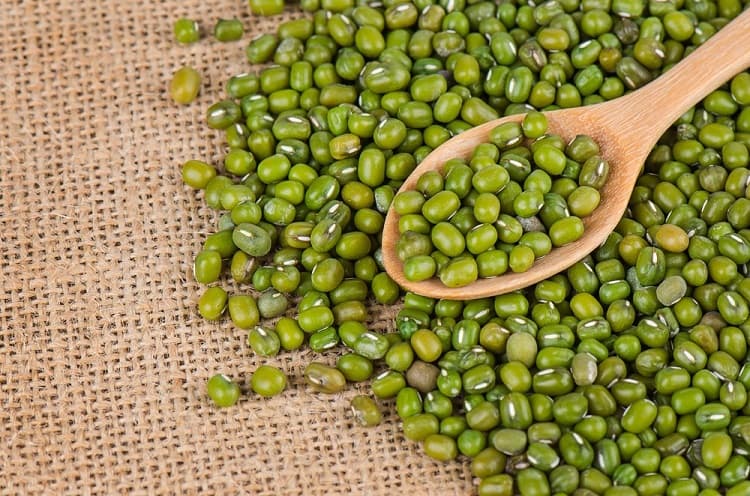
Moong dal, known botanically as Vigna radiata, is one of India's most versatile and protein-rich pulses. In Rajasthan's arid Jodhpur region, the crop thrives on residual soil moisture and minimal irrigation, developing a dense nutrient profile and excellent cooking characteristics. The dry climate during maturation reduces fungal pressure, resulting in clean, bright grains with high germination rates — a critical factor for the sprouting and processing industries.
VegTradeHub sources moong dal from vetted grower groups across Jodhpur, Pali, and Nagaur districts. We supply both whole green gram (with intact green seed coat) for sprouting and whole-grain applications, and split yellow moong dal (dehulled and split) for traditional dal milling, instant mixes, and noodle production. Every lot undergoes multi-stage cleaning, grading, and quality verification before dispatch, ensuring consistency for industrial buyers and export markets across Asia, the Middle East, and beyond.
Whole green gram selected for >95% germination rate — essential for commercial sprouting operations.
Consistently 23-25% protein on dry basis, verified by periodic lab analysis for nutrition-label compliance.
Dried to 10-11% moisture for safe long-distance transport and extended storage stability.
Split moong dal processed with precision dehulling — minimal broken kernels, bright yellow appearance.
Processed in HACCP-aligned facilities with metal detection, destoning, and optical sorting.
Single-origin lots blended to tight specifications — same cooking time, texture, and yield every order.
Whole, split, or milled to flour — supplied to your exact particle-size specification.
Lot codes link back to farmer group, harvest date, and field block for full supply-chain transparency.
Rajasthan's hot, dry summers and cool winters create ideal conditions for moong cultivation. The crop matures under intense sunlight with low humidity, minimizing disease pressure and producing grains with high dry-matter accumulation. Day-night temperature differentials during pod-fill enhance protein synthesis, while the absence of monsoon rains at harvest prevents weathering and sprouting in the pod.
The sandy loam to loamy sand soils of the Jodhpur-Pali-Nagaur belt are well-drained, low in salinity, and rich in micronutrients — particularly zinc and iron — which translocate into the grain. These light-textured soils allow easy root penetration and nodulation, supporting robust nitrogen fixation by native Rhizobium strains. The result is a pulse with naturally elevated mineral density and clean flavor profile.
Generations of Marwar farmers have refined moong cultivation practices — optimal sowing windows, seed rates, and intercropping systems that maximize yield without compromising grain quality. VegTradeHub partners with grower collectives who maintain these traditions while adopting improved varieties (IPM 02-3, SML 668, Virat) and integrated nutrient management. This blend of heritage knowledge and modern agronomy delivers consistent commercial grades.
Jodhpur's strategic location offers multimodal export connectivity: Jodhpur Airport (JDH) for air freight to Gulf and Southeast Asian markets; Jodhpur railway junction linking to Mundra and Pipavav ports (6-8 hours by road) for sea reefer containers; and the Delhi-Mumbai Industrial Corridor providing efficient road transport to North Indian processors. This infrastructure reduces harvest-to-port time, preserving grain viability and nutritional quality.
| Parameter | Grade A (Premium) | Grade B (Standard) | Grade C (Processing) |
|---|---|---|---|
| Form | Whole green gram / Split dal | Whole green gram / Split dal | Split dal / Flour |
| Moisture content | ≤ 11% | ≤ 12% | ≤ 13% |
| Protein (dry basis) | ≥ 24% | ≥ 22% | ≥ 20% |
| Foreign matter | ≤ 0.1% | ≤ 0.25% | ≤ 0.5% |
| Damaged / discolored grains | ≤ 0.5% | ≤ 1.5% | ≤ 3% |
| Broken / split (whole gram) | ≤ 1% | ≤ 3% | N/A |
| Dehulling efficiency (split) | ≥ 98% | ≥ 95% | ≥ 90% |
| Germination rate (whole) | ≥ 95% | ≥ 85% | Not applicable |
| Weevil / insect damage | Zero tolerance | Zero tolerance | Zero tolerance |
| Aflatoxin (B1+B2+G1+G2) | ≤ 4 ppb | ≤ 10 ppb | ≤ 15 ppb |
| Pesticide residues | Per FSSAI/Codex/EU MRL | Per FSSAI/Codex/EU MRL | Per FSSAI/Codex/EU MRL |
| Packaging | 25 kg / 50 kg PP woven bags; 500 kg / 1000 kg jumbo bags; custom retail packs | ||
| Country of origin | India | ||
| Port of loading | Jodhpur (air), Mundra / Pipavav (sea) | ||
VegTradeHub offers full private-label packaging services for importers, distributors, and retail chains:
| Parameter | Specification |
|---|---|
| Temperature | 10-15°C (cool, dry); avoid >25°C to prevent insect development |
| Relative humidity | 55-65% RH; maintain grain moisture ≤12% |
| Air circulation | Continuous, uniform; avoid condensation on bag surfaces |
| Pest management | IPM program: pheromone traps, residual sprays on structure (not product), regular inspection |
| Stacking | Max 10 bags high on pallets; leave 50 cm wall clearance, 1 m aisle space |
| Segregation | Store away from spices, chemicals, fertilizers, and strong odors |
18-24 months in cool, dry storage (10-15°C, 55-65% RH). Maintains germination >90%, protein stability, and cooking quality. Ideal for sprouting and premium retail.
12-18 months under proper storage. Minor decline in germination after 12 months; cooking and nutritional quality remain excellent for dal milling and processing.
9-12 months - intended for near-term processing (flour, protein isolate, snack extrusion). Higher moisture tolerance but monitor for lipid oxidation in flour.
Whole green gram (Grade A, >95% germination) for commercial sprout production — salad sprouts, bean sprouts for Asian cuisine, sprout powders, and functional food ingredients.
Split moong dal for stone mills, roller mills, and industrial dal plants. Uniform dehulling yield, minimal powder loss, consistent cooking time (15-20 min) for branded retail packs.
Moong dal flour (fine, 80-100 mesh) for glass noodles (cellophane noodles), Korean dangmyeon, Vietnamese bún, and gluten-free pasta blends. High starch purity, neutral flavor.
High-protein (24%+) whole gram for wet fractionation — moong protein isolate (80-90% protein) for plant-based meat, dairy alternatives, sports nutrition, and clinical nutrition.
Pre-cooked, dehydrated moong dal for instant khichdi, pongal, dosa batter mixes, and soup bases. IQF cooked moong for frozen meal kits and HORECA supply.
Moong dal flour and grits for extruded snacks, bhujia, sev, and baked crackers. Uniform particle size reduces die wear and ensures consistent expansion.
Bulk supply to Dubai, Singapore, Rotterdam hubs for onward distribution to MENA, Southeast Asia, and Europe. Mixed-container loading with other Rajasthan pulses (chana, moth) available.
UAE, Saudi Arabia, Qatar, Oman, Kuwait, Bahrain, Jordan, Lebanon. Strong demand for whole gram (sprouting) and split dal (retail/foodservice). Air freight dominant.
Singapore, Malaysia, Thailand, Indonesia, Philippines, Vietnam, Hong Kong. Major hub for noodle processing, bean sprout production, and re-export to China.
Netherlands, Germany, UK, France, Belgium, Italy. Growing plant-protein sector drives demand for protein-grade moong. EU MRL compliance and phytosanitary certification essential.
Bangladesh, Nepal, Sri Lanka, Maldives. Land/sea connectivity; price-sensitive markets favor processing grades and bulk dal. Rupee trade arrangements available.
USA, Canada. Air freight for sprouting/retail; sea freight for processing. USDA APHIS import permit and treatment requirements managed by VegTradeHub.
Mauritius, Seychelles, South Africa, Kenya, Tanzania. Demand via Dubai transshipment or direct from Mundra. Growing pulse processing capacity in East Africa.
Direct work with grower groups in Jodhpur, Pali, and Nagaur — full traceability to field level.
Track record shipping pulses to 25+ countries with destination-specific documentation expertise.
Standardized grading, documented QC, and lot-level traceability season after season.
From trial LCL shipments (2 MT) to full-season programs (500+ MT) — no rigid minimums.
Harvest-to-load discipline: pre-booked reefer space, priority air cargo slots, buffer stock.
Complete, accurate export documents delivered on time — customs clearance without delays.
Transparent cost breakdowns — farm gate, processing, logistics, documentation — no hidden margins.
Single point of contact per buyer; responsive across time zones; post-shipment follow-up.
Private label, retail-ready, MAP, eco-friendly — adapted to your market requirements.
Multi-season supply partnerships with forecast sharing, volume commitments, and price stability.
Trial orders from 2 MT (LCL air/sea). Full container programs start at 18-22 MT (20'FCL/40'HC) with better pricing, priority grading, and dedicated acreage allocation.
Yes — mixed containers are standard. Typical splits: 50/50, 60/40, or custom ratios. Each form is packed, labeled, and documented separately within the same container.
Grade A whole green gram is tested at >95% germination at dispatch. We provide third-party lab certificates (ISTA method) on request. Germination viability maintained through cool-chain logistics.
Yes — full private-label service: custom artwork, multi-language labels, consumer packs (500g-5kg), retail-ready formats, MAP, and eco-friendly films. MOQ for custom print: 5,000 bags per SKU.
We procure from defined varietal blocks (IPM 02-3, Virat, SML 668) with known protein profiles. Incoming lots are tested via NIR; outbound lots are blended to target 23-25% protein. COA provided per shipment.
Sea freight (dry/reefer) from Mundra/Pipavav — 10-28 days. Air freight from Jodhpur/Jaipur — 12-36 hrs. LCL consolidation weekly. Land border to SAARC countries. We arrange freight, insurance, and docs.
Yes — we supply moong dal flour milled to 80-120 mesh for noodles, protein extraction, and snack extrusion. Particle size distribution, starch damage, and protein solubility data available per lot.
Select farms: GlobalGAP, IndiaGAP. Packhouse: HACCP, FSSAI Central License, APEDA RCMC. Residue testing per FSSAI/Codex/EU MRL. Organic (NPOP/USDA-NOP) available on specific lots — inquire for availability.
Kharif crop (Oct-Nov harvest): book July-September. Spring/summer crop (Mar-Apr harvest): book January-February. Early booking secures Grade A allocation, preferred pricing, and dedicated processing slots.
Claims must be reported within 48 hours of arrival with photos, temperature/humidity logs, and lab reports (if applicable). We investigate within 24 hours and resolve (replacement, credit, or inspection) within 7 business days per contract terms.